Kampong Thom Isn't Waiting for the Rain
BRM Team
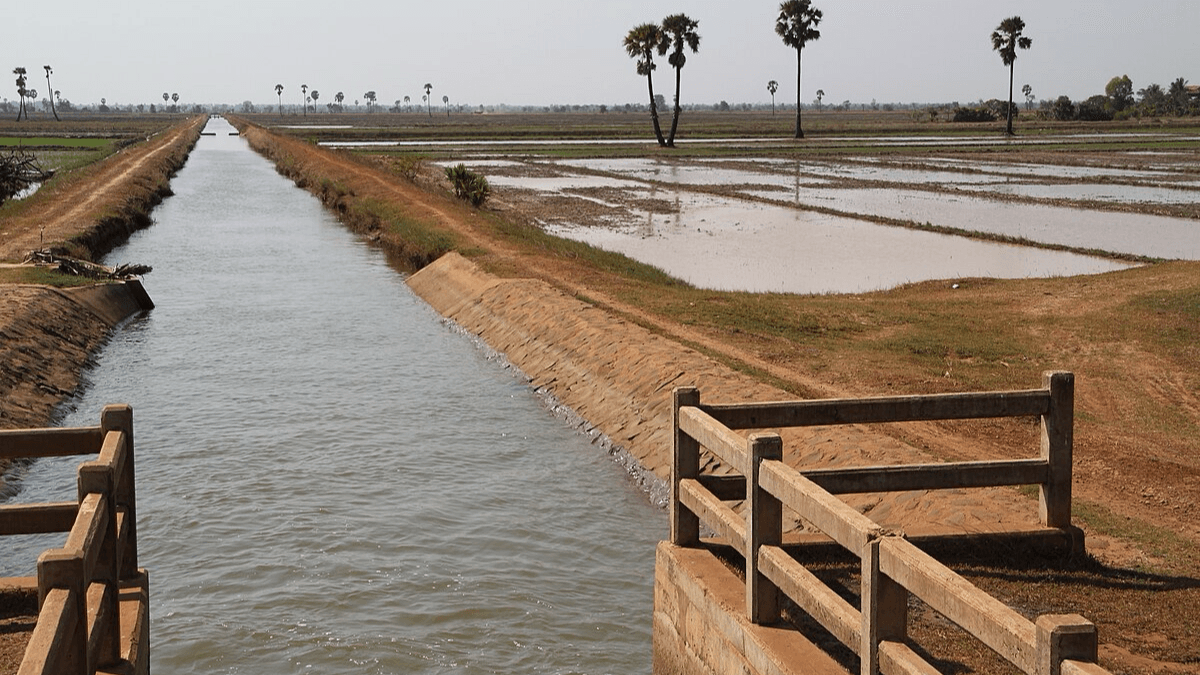
TABLE OF CONTENTS
SHARE
Why this province may quietly be Cambodia's most resilient agricultural bet:
Most people still think Cambodian farming lives or dies by the monsoon — That's true until it isn't.
Kampong Thom sits right in the middle of the Tonle Sap–Stung Sen basin. On paper, that sounds technical. In reality, it means this province stopped betting its future on rain. It's betting on stored water, canals that actually work, and infrastructure designed to move water when farmers need it, not when the sky decides to cooperate.
That shift changes everything.
The water story most people miss:
Here's the uncomfortable part. Global drought isn't a future risk. It's already tightening margins, shortening growing windows, and exposing provinces that still farm on hope.
So the real question isn't whether Kampong Thom faces drought.
It's what happens when drought hits.
In Kampong Thom, the system bends instead of snapping.
The Kampong Kor Dam holds roughly 300 million cubic meters. Add the Stung Thap Canal and upgraded irrigation networks, and water stops being a seasonal gamble. It becomes a managed input. Water flows from upstream reservoirs down toward Tonle Sap's Zone 3, stabilizing supply across multiple districts.
That's the macro view.
On the ground, it's simpler. Farmers in places like Baray and Santouk aren't locked into one crop cycle anymore. Two crops a year are normal now. Labor costs drop. Marketable yields climb. Farming starts acting like a business instead of a prayer.
Can Kampong Thom stay secure despite global drought?
Short answer: yes, relative to most regions.
Not because drought disappears, but because Kampong Thom isn't fragile by design.
Diversified water sources mean the system doesn't collapse when one link underperforms. Modernized irrigation focuses on control and efficiency rather than digging canals and walking away. Multi-cropping is happening now, not promised for later. And Kampong Thom isn't a pilot project. It sits inside Cambodia's long-term water and climate resilience strategy.
This isn't theoretical resilience. It's operational.
Is Kampong Thom one of the best places for agriculture in Cambodia?
For many projects, yes.
Kampong Thom has over 290,000 hectares under rice. It sits on central transport corridors. Its crop base is diversified: cassava, cashew, rubber, corn, beans. Water reliability for irrigated farming keeps improving.
That combination is rare.
Quick comparison: where Kampong Thom really stands
Province Water reality Main crop strengths Scale and logistics Key risk Kampong Thom Large dam and canal upgrades mean water is managed now, not rain-fed Rice, cassava, cashew, rubber, corn, beans Central location, easy aggregation, built for scale Climate volatility remains, but fragility is lower Battambang Tonle Sap access helps, but flooding is unpredictable Rice, cassava, corn, mango Strong rice base and farmer experience Flood events can wipe out gains quickly Kampong Cham Mekong access with irrigation upgrades underway Rice, cassava, sugarcane, rubber, pepper Large labor pool, river transport Structural exposure to river flooding Kampot Reliable water in specific zones, not system-wide Pepper, durian, bananas, mango Port access, premium export routes Salinity and terroir sensitivity limit scale Mondulkiri Mostly rainfed with limited irrigation pockets Coffee, avocados, pepper, cashew Niche scale, longer logistics Drought risk, partly offset by altitude
Is it the best place for everything? No.
If you're chasing terroir-driven pepper, high-altitude coffee, or niche microclimate crops, other provinces will beat it. Kampot and Mondulkiri win those battles.
But for broad-based agribusiness, irrigated rice, diversified cash crops, and processing-linked farming models, Kampong Thom consistently ranks near the top.
This is what operational resilience looks like on the ground.
Other Insight You Might Like...
12 August 2026
Fewer Visitors, More Cargo
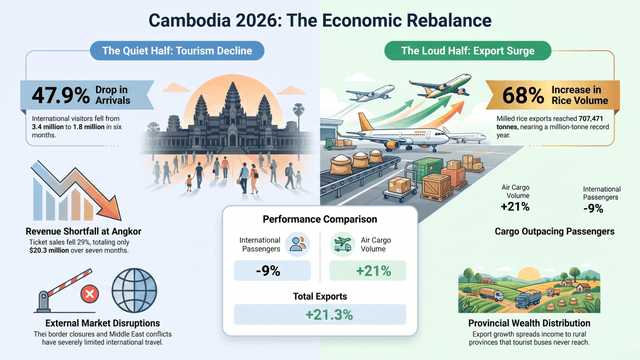
Cambodian tourism fell 47.9 percent this year. Milled rice exports rose 68 percent. Fewer people are flying in, and more of what the country grows flies out.
12 August 2026
Beyond the Mill: How BRM Agro Is Rebuilding Cambodia’s Rice Value Chain from Kampong Thom
Most rice companies in Southeast Asia follow a simple playbook: buy paddy from farmers, mill it, bag it, and sell it. That model works — until you ask harder…
