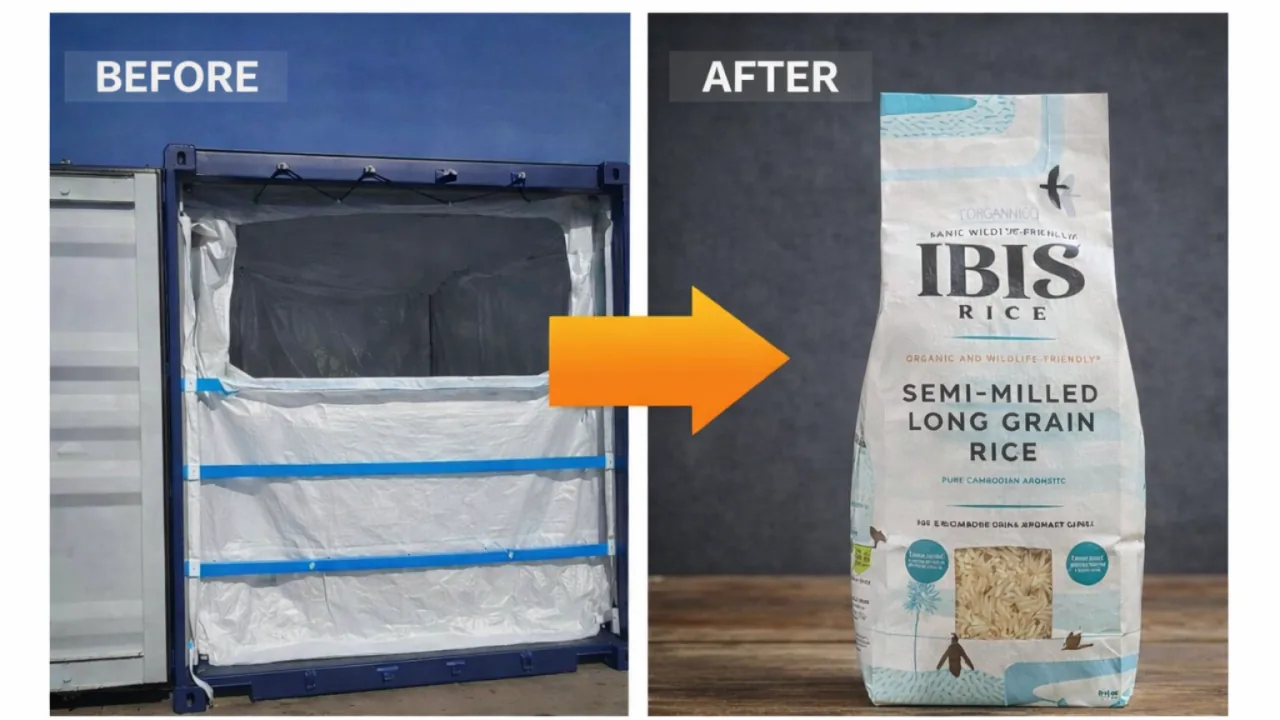
Cambodia consistently wins international awards for its rice. Phka Malis is one of the most respected fragrant varieties in global markets, with demand from Asia, Europe, Africa and North America. Yet most of our exports still leave the country in large container bags in bulk. Once they arrive abroad, foreign distributors repackage them into attractive retail bags and sell them at significantly higher prices often without mentioning Cambodia as the origin.
Cambodia produces the rice. Others capture the final value. This is the gap we need to close.
The real opportunity is in finished products
Growing, harvesting and milling rice are only part of the value chain. The larger share sits in branding, packaging and retail. Today, Cambodia focuses on bulk supply, while foreign companies focus on consumer presentation. As a result, we receive the income of a producer rather than the income of a brand owner.
If we want to increase national revenue and create a more resilient industry, we need to participate in the retail segment, not just the agricultural stage.
The technology already exists
Modern packaging is the key step. Nitrogen flushing removes oxygen, protects fragrance, prevents insects and maintains aroma from mill to supermarket shelf. This technology is standard for high quality rice.
Cambodia already uses modern machinery from Bühler, Lamico and Satake. Several local producers, including BRM Agro in Kampong Thom, have already implemented nitrogen-flushed retail packaging lines. The country has the capability. What we need now is scale.
What value-added packaging means for the economy
Today Cambodia captures between 107 to 408 dollars of value addition per ton of rice. When packaging, branding and retail are included, the total value can increase by about 60 percent. When we export only bulk in containers, this additional value is taken elsewhere.
If we export finished retail products, the benefits multiply:
• Mills earn higher margins
• Farmers receive better prices at the farm gate
• Packaging, design and logistics industries expand
• Government revenue increases
• The economy becomes less vulnerable to commodity price swings
This shift is not only about rice. It is about climbing the value chain.
Lessons from neighboring countries
Thailand and Vietnam made this transition earlier. They invested in retail-ready packaging, built clear national rice brands and placed their products on supermarket shelves around the world. Consumers abroad recognize their names instantly.
Cambodia, despite winning awards for quality, is still rarely seen as a retail-branded product outside the region. By exporting rice under local brands such as Ibis or King White Elephant, we introduce Cambodian identity to global markets rather than supplying anonymous bulk goods.
The next step in industrial development
Cambodia has already improved seeds, farming techniques and milling standards. The next logical step is to scale consumer-ready packaging.
This encourages higher packaging standards, stronger food safety systems and more consistent export practices. These improvements strengthen the long-term competitiveness of Cambodian businesses.
Why brand ownership matters
A brand creates trust, controls pricing and builds long-term customer loyalty. When foreign firms repackage Cambodian rice under their own labels, they capture this strategic advantage.
If Cambodia exports rice under Cambodian-controlled brands, we retain that value. We shape the narrative, set the price and build direct relationships with buyers.
A strategic choice
Cambodia can continue exporting bulk rice and earning stable but limited returns. Or it can take the next step by developing retail-ready packaging, expanding local brands and participating fully in the final stage of the value chain.
We already have the quality and the capability. Some producers have shown what is possible.
The opportunity now is to expand it so Cambodia benefits fully from the rice the world already recognizes.